Stone calculator for Oregon
Weight calculations for graded stone materials, beginning with 3/8 inch chips and ending with railroad ballast.
Enter your project dimensions
Most crushed stone is sold by the ton, with a consistent conversion for many grades: approximately 2,800 lb in a cubic yard, or 1.4 tons per yard. Use this stone tonnage calculator for the twelve graded products available, from 3/8 inch chips through 2.5 inch railroad ballast, with the selected material's weight applied automatically. Contractors may start with a specification number, while homeowners often begin with the project itself. The reference below connects either description to the right stone.
How the calculation works
- Start by finding the area in feet. Multiply length by width for driveways and pads; for drains, multiply trench length by trench width.
- Choose depth based on the layer's function: 2 to 3 inches for surface courses, 4 inches for base, and 12 inches or more for French drains.
- Divide cubic feet by 27 for cubic yards. Then multiply yards by 1.4 to estimate tons of typical crushed stone.
Weights for each stone product
| Product | Weight per cubic yard | Tons per yard |
|---|---|---|
| #57 / #67 / 3/4" crushed stone | ≈ 2,800 lb | 1.40 |
| #89 / #8 / 3/8" chips | ≈ 2,800 lb | 1.40 |
| Stone screenings / dust | ≈ 2,900 lb | 1.45 |
| Crusher run / road base | ≈ 3,000 lb | 1.50 |
| #4 stone / railroad ballast | ≈ 2,900 lb | 1.45 |
| Rip rap | ≈ 3,100 lb | 1.55 |
| Depth | 1 cubic yard covers | 1 ton covers |
|---|---|---|
| 2 inches | 162 sq ft | ≈ 116 sq ft |
| 3 inches | 108 sq ft | ≈ 77 sq ft |
| 4 inches | 81 sq ft | ≈ 58 sq ft |
| 6 inches | 54 sq ft | ≈ 39 sq ft |
Understanding stone size numbers
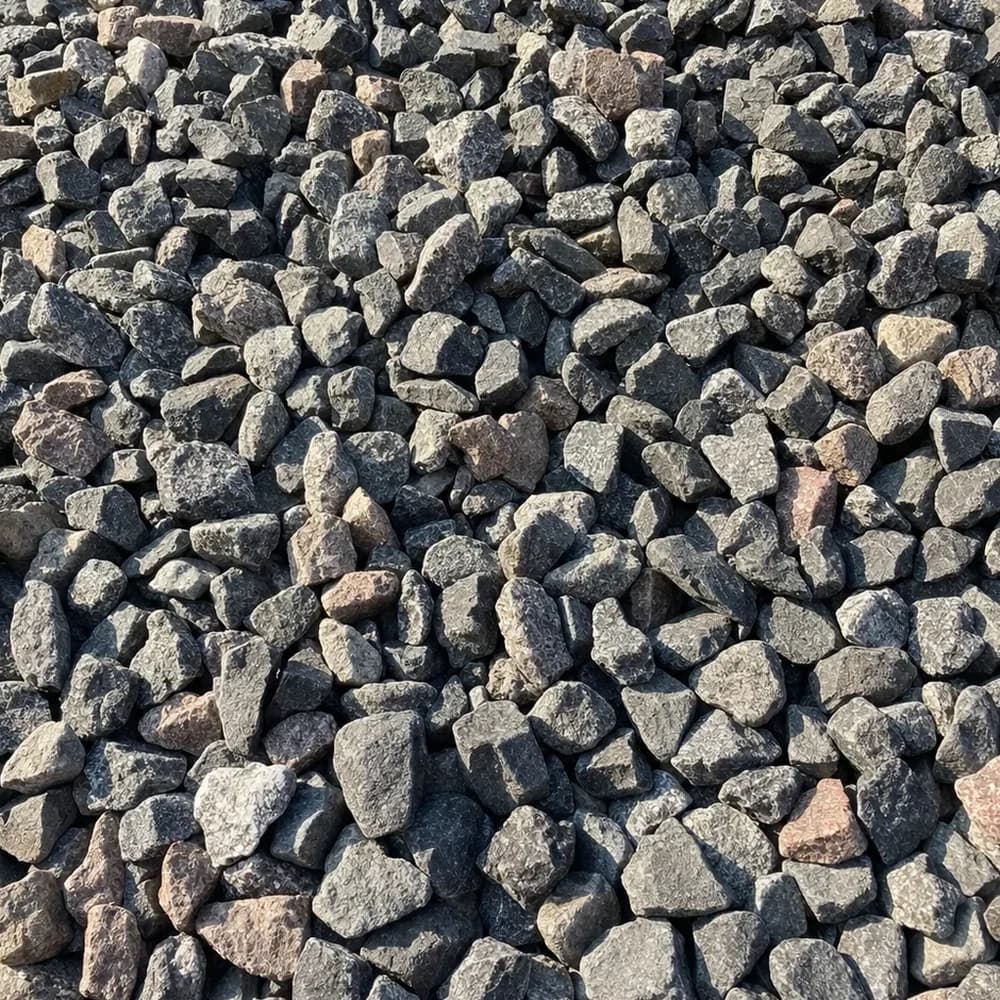
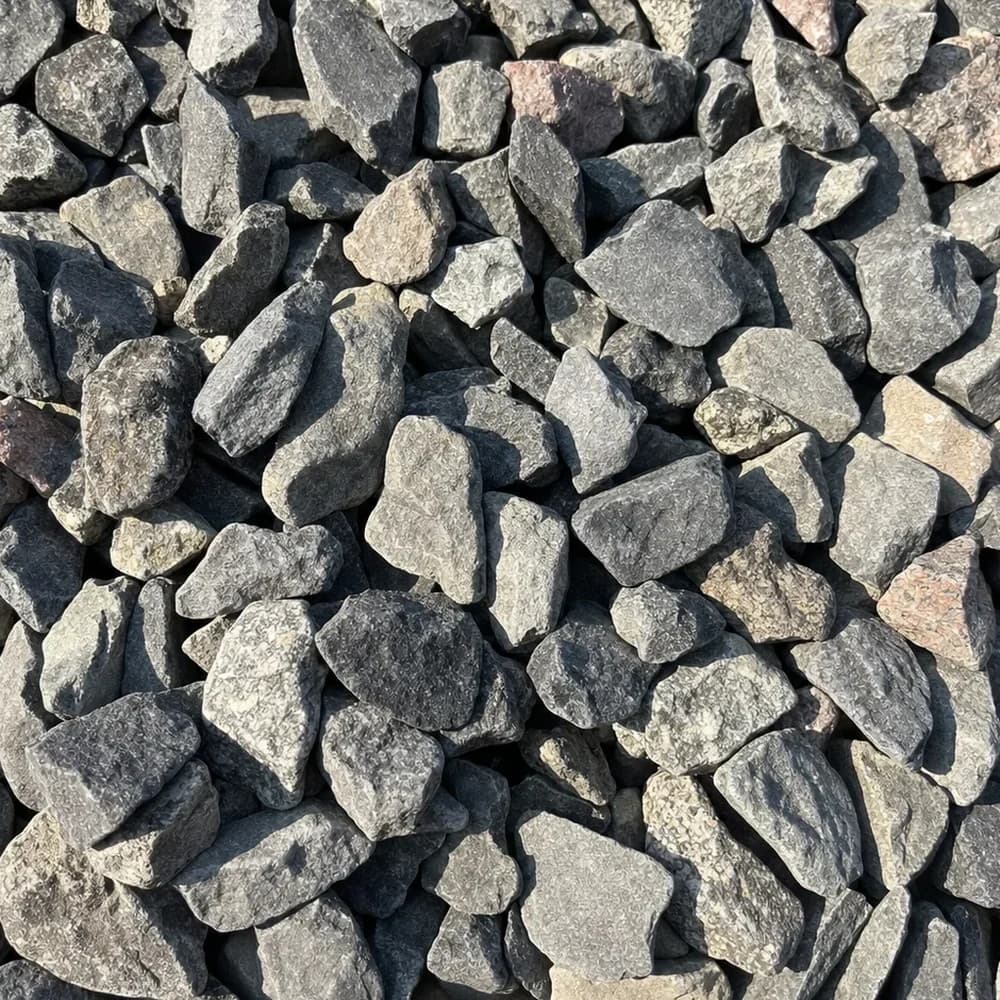
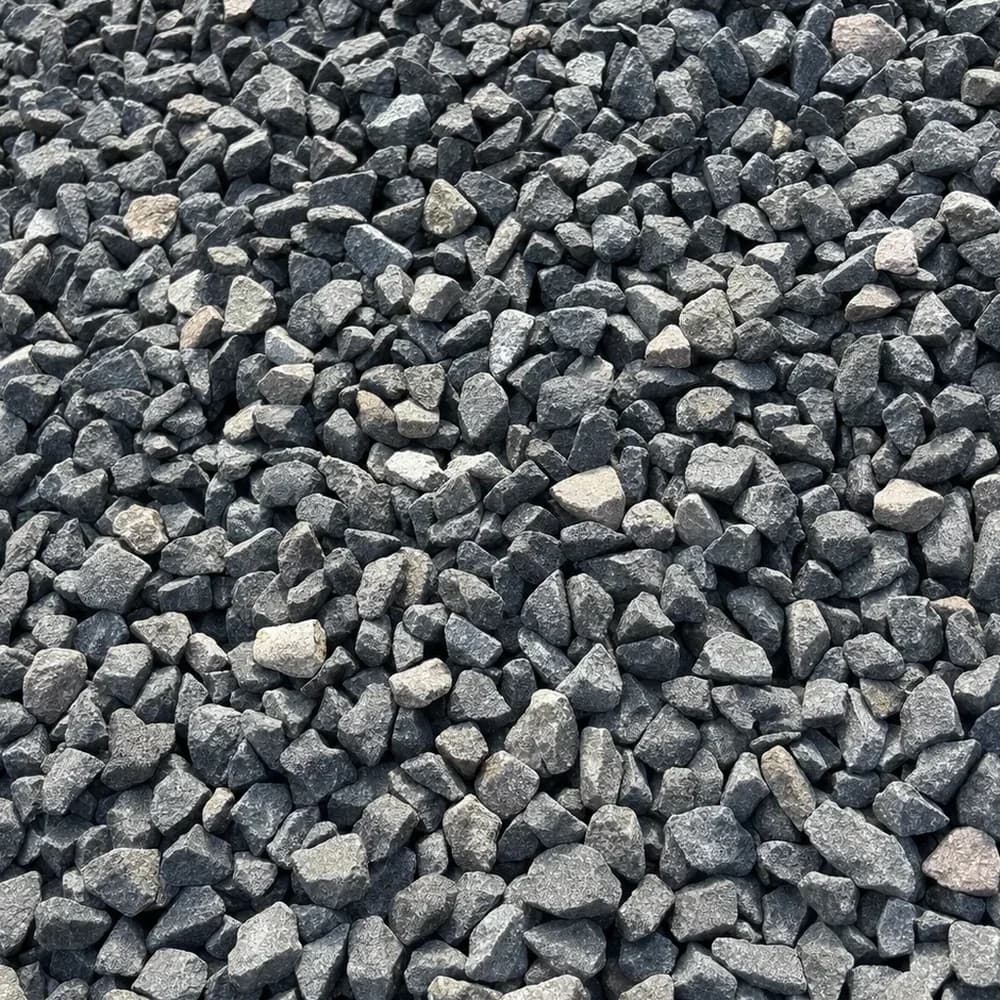
Stone grade labels describe size ranges, with lower numbers indicating larger pieces. #4 measures 1 to 2 inches. #57, sized 3/4 to 1 inch, is used for drainage, driveways, and concrete work. #67 is finer at 1/4 to 3/4 inch and is often used around pipe bedding. #8 is about 3/8 to 1/2 inch, while #89 includes material from 3/8 inch down to fines; each suits paver joints and compacted finish layers. Screenings combine dust with small chips to create a firm, screedable bed. Railroad ballast is heavy angular stone, 1 to 2.5 inches in size, for load-bearing and quick drainage below tracks and equipment pads.
Clean stone or fines-bearing stone? Choose carefully
Stone on this page falls into two categories. Washed, clean material such as #57 stays open for water flow, making it suitable for drainage. Crusher run and road base contain fines that bind when compacted, which suits base layers. Using each in the wrong place causes problems: crusher run in a French drain can trap water, while a #57 base beneath a driveway can continue moving. When a drawing or permit specifies a gradation, use that stated material. If the product name is uncertain, send the line item through the contact form; "3/4 clean" and "#57" can refer to the same stone under different names.
Common stone order examples
| Project | Typical size | Depth | Volume | Weight |
|---|---|---|---|---|
| French drain | 30 ft x 12" x 12" | 12" | 1.1 yd³ | 1.6 tons |
| Pipe bedding (#67) | 40 ft x 18" wide | 6" | 1.1 yd³ | 1.6 tons |
| Retaining-wall backfill | 30 ft x 18" wide | 24" | 3.3 yd³ | 4.7 tons |
| Construction entrance (#4) | 40 x 12 ft | 6" | 8.9 yd³ | 12.9 tons |
| Dog run | 15 x 8 ft | 3" | 1.1 yd³ | 1.6 tons |
| Shed pad top course | 10 x 12 ft | 2" | 0.7 yd³ | 1 tons |
Example calculation: a 30-foot French drain
For a trench measuring 30 feet by 12 inches by 12 inches, plan on 30 cubic feet of material. That works out to 1.1 cubic yards, or 1.6 tons of #57. The 4-inch pipe occupies just about 0.1 yards, so keep the order at 1.6 tons and place any remaining stone at the outfall. Line the excavation with non-woven fabric before adding stone to prevent winter clay soil from filling the drainage gaps.
Two ways to avoid incorrect stone orders
- Check the material specification first, then match it to the name used locally. Crusher run, crush and run, Quarry Run, pit run, and bar run all describe one product. #57 and "57s" name the same stone.
- Plan for 5 to 10% compaction when angular aggregate is rolled. Use the calculator's extra-percent setting for ordinary settling; engineered base work should follow its specified compacted depth.
- For paver work, first compact the base aggregate, then place a thin bedding layer of screenings or concrete sand. On soft ground, including wet Willamette Valley clay, dust by itself is not a suitable paver bed.
- Calculate the full trench volume without subtracting the pipe. For pipes below 6 inches, the displaced material is seldom more than a wheelbarrow load.
Crushed stone measurements
What does a cubic yard of crushed stone weigh?
What coverage comes from a ton of #57 stone?
How do #57, #67 and #89 stone differ?
What stone depth is needed for a driveway?
Under pavers, should I use stone dust or sand?
Which stone size works for a French drain?
Will crushed stone compact?
How can railroad ballast be used beyond railroads?
More calculators
Find the stone specified for your project
Twelve graded stone products sold by the ton, with free delivery across Oregon.