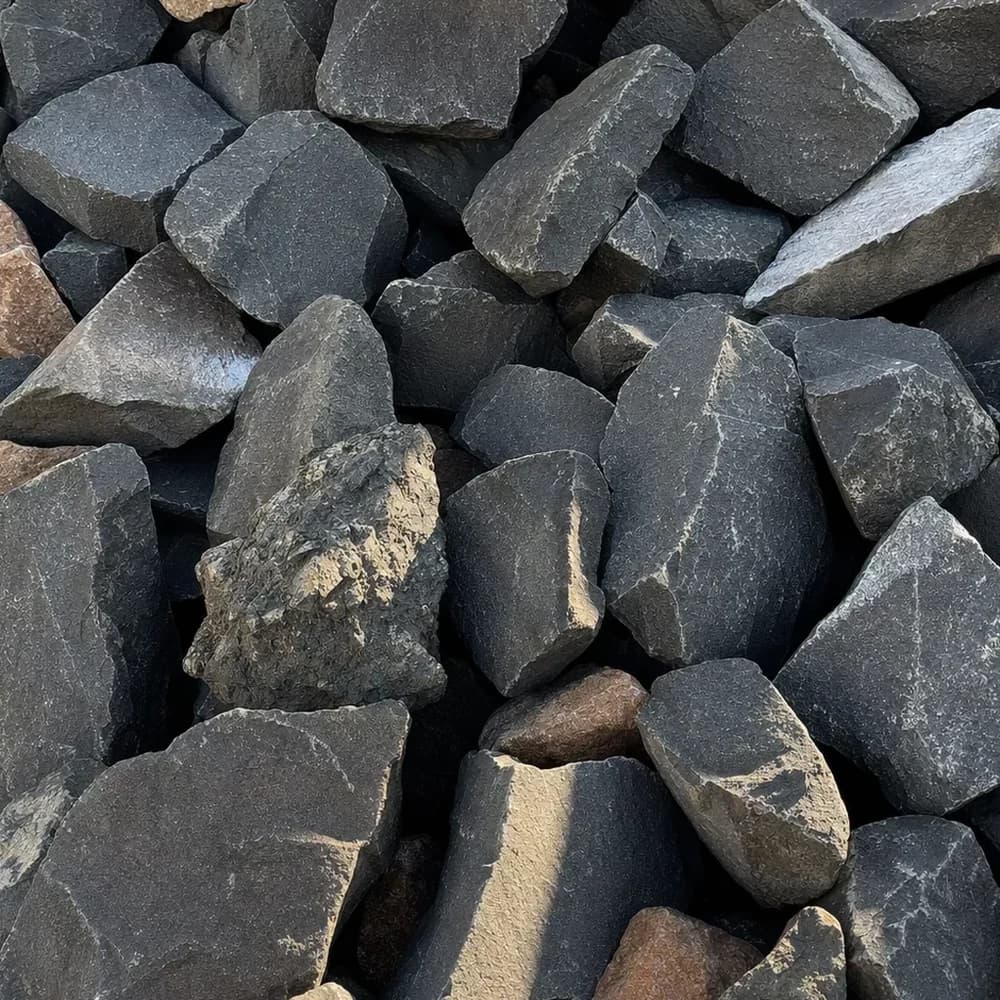
Rip rap calculator for Oregon
Calculate shoreline and slope material by installed layer depth, since armor stone is not placed at landscape-rock depths.
Enter your project dimensions
A ton of riprap covers approximately 17 square feet. Armor stone is installed in layers of 12 inches or more, which makes its per-ton coverage far lower than landscape rock. This calculator uses a 3,100 lb per cubic yard density for material generally sized 4 to 12 inches and larger.
Measuring an armored bank
- Use the tape on the sloping bank face rather than the level surface above it, then multiply that measurement by the shoreline or channel length.
- For erosion control, use a rock layer 1.5 to 2 times the largest stone size, with 12 inches as the practical minimum.
- To find tons, divide cubic feet by 27 for cubic yards, then multiply by 1.55.
Tons of coverage
| Layer thickness | 1 ton covers | Tons per 100 sq ft |
|---|---|---|
| 12 inches | ≈ 17 sq ft | 5.7 |
| 18 inches | ≈ 12 sq ft | 8.6 |
| 24 inches | ≈ 9 sq ft | 11.5 |
Installation details for stable stone
- Install the base before the rock: place non-woven geotextile beneath it, or use 3-4 inches of #4 stone. On bare soil, riprap may hold its appearance for a season before erosion beneath the bank causes it to settle.
- Anchor the toe by placing the bottom course beneath the waterline or anticipated scour depth. Failure commonly begins at the base.
- Shape the bank to a 2:1 slope or gentler before installing stone. A face steeper than that calls for engineering, not extra rock.
- Use hand setting or equipment for the exposed finish layer, nesting each stone against its neighbors rather than leaving it in its landing position.
- Extend the outlet apron 4-6 pipe diameters past a culvert. Scour commonly begins in that downstream reach.
Example: 50 feet of pond bank
A shoreline bank with a 6-foot face over 50 feet contains 300 square feet of slope. For an 18-inch course: 300 x 1.5 = 450 cubic feet = 16.7 cubic yards, requiring about 26 tons of riprap, or 27 after a small allowance. Use a roll of geotextile beneath it, or bed the rock on #4 stone, roughly 4 tons. Check the delivery path before placing an order. In Willamette Valley winter clay, the last 20 feet to a pond can stop a loaded truck, and relocating rock after delivery costs twice.
Following the first major storm
After water recedes, make a pass along the bank. Check the toe for rock that has moved, bare soil visible in the gaps, and exposed fabric. Put displaced stone back, use reserve material to fill shallow areas, and inspect the outfall apron for erosion. A brief check twice yearly keeps maintenance limited: riprap is intended to protect the slope with the stone itself.
Stone sizes at a glance
Choose the stone size for the water force involved. Riprap from four to eight inches is used for pond banks, downspout outlets, and gentle streams. Material from eight to twelve inches fits shorelines with boat wake and quicker channels. Highway and spillway work uses its own engineered specifications and layer depths, so follow the project drawing. When deciding between sizes, select the larger stone and increase the layer thickness.
Riprap quantity, sizing and installation
How can I calculate the riprap needed?
What coverage comes from 1 ton of riprap?
What quantity is 1 ton of riprap?
What is the cost for 1 ton of riprap?
What layer depth is needed for riprap?
Is hand placement suitable for riprap?
More calculators
Plan protection for the bank.
RipRap is available by the ton with free delivery, along with #4 bedding stone for beneath the rock.