Gravel calculator for Oregon
Calculate gravel or landscape rock by cubic yard and ton, select the material to order, and get free delivery.
Enter your project dimensions
At a depth of 2 inches, 116 square feet takes about one ton of crushed gravel. This calculator uses that estimate to size the material needed for the job. Add the area dimensions and depth, select a gravel type, and it will show cubic yards, tons, and the delivered price. It also applies to landscape rock, as crushed gravel, #57 stone, and similar materials weigh close to 2,800 lb in a cubic yard.
Calculate the gravel needed
- Start by measuring in feet. For a rectangle, use length and width; for a circle, enter its diameter. Treat an L-shaped driveway as two rectangles, then use multiple-areas mode to combine the totals.
- Choose the depth in inches. Walkways and refreshes generally use 2 to 3 inches. For a new driveway, install 4 to 6 inches in two layers rather than one pour.
- Calculate cubic feet by multiplying area by depth in feet. Divide that total by 27 to get cubic yards, then multiply by 1.4 to estimate tons.
Tons = cubic yards × 1.4 (crushed gravel at ~2,800 lb per cubic yard)
Useful weight and coverage figures
For dry crushed gravel, 1 cubic yard is roughly 2,800 lb, which works out to 1.4 tons. A ton therefore equals about 0.71 cubic yards. More depth means less area covered:
| Depth | 1 cubic yard covers | 1 ton covers |
|---|---|---|
| 2 inches | 162 sq ft | ≈ 116 sq ft |
| 3 inches | 108 sq ft | ≈ 77 sq ft |
| 4 inches | 81 sq ft | ≈ 58 sq ft |
| 6 inches | 54 sq ft | ≈ 39 sq ft |
| Material | Weight per cubic yard | Tons per yard |
|---|---|---|
| Driveway / walkway gravel | ≈ 2,800 lb | 1.40 |
| Pea gravel (3/8") | ≈ 2,800 lb | 1.40 |
| Crushed stone (#57, 3/4") | ≈ 2,800 lb | 1.40 |
| Crusher run / road base | ≈ 3,000 lb | 1.50 |
| River rock (1–3") | ≈ 2,700 lb | 1.35 |
Recommended depths by project
- Garden paths and walkways: use 2 to 3 inches of walkway gravel over compacted soil or fabric.
- Existing driveway refresh: apply 2 inches of surface gravel.
- New driveways: install 3 to 4 inches of compacted crusher run, then add 2 to 3 inches of driveway gravel or #57. The bottom course carries traffic, while the finish layer drains water and provides the visible surface.
- Patios and seating spaces: use 2-3 inches contained by sturdy edging.
- French drains and wet areas: plan for 12 inches or more of clean stone. Use the Stone Calculator for drainage work, which calls for washed rock without fines.
Example calculation: a 50 x 10 ft driveway
For 500 square feet at 4 inches overall, calculate 500 x 0.333 = 167 cubic feet. Dividing that by 27 gives 6.2 cubic yards, or 8.7 tons. Include 5% for compaction, bringing the order to about 9 tons, with roughly a 60/40 split of crusher run base and surface gravel. That base-and-top-layer approach is important in Willamette Valley clay. Measuring a driveway precisely but placing only a 2-inch layer directly over soil can lead to ruts.
Common project estimates
These are starting estimates before measuring, using 1.4 tons per cubic yard:
| Project | Typical size | Depth | Volume | Weight |
|---|---|---|---|---|
| Single-car driveway pad | 20 x 10 ft | 4" | 2.5 yd³ | 3.5 tons |
| Two-car driveway | 24 x 20 ft | 4" | 5.9 yd³ | 8.3 tons |
| Country driveway | 50 x 12 ft | 6" | 11.1 yd³ | 15.6 tons |
| Garden path | 20 x 3 ft | 3" | 0.6 yd³ | 0.8 tons |
| Patio seating area | 12 x 12 ft | 3" | 1.3 yd³ | 1.9 tons |
| Shed base | 10 x 12 ft | 4" | 1.5 yd³ | 2.1 tons |
Four errors that lead to another delivery
- Missing the base layer on a new driveway. Gravel installed right over soil may rut within a season, so place the base first and the finish gravel second.
- Comparing quotes only by area. The same 20 x 10 pad may have different quotes because of depth, so compare equal tonnages.
- Less than 2 inches: a one-inch layer can sink into spring mud.
- Forgetting the crown. Water pools on a flat drive, but a 2% slope moves it off and helps keep fines in place.
Matching gravel to the surface
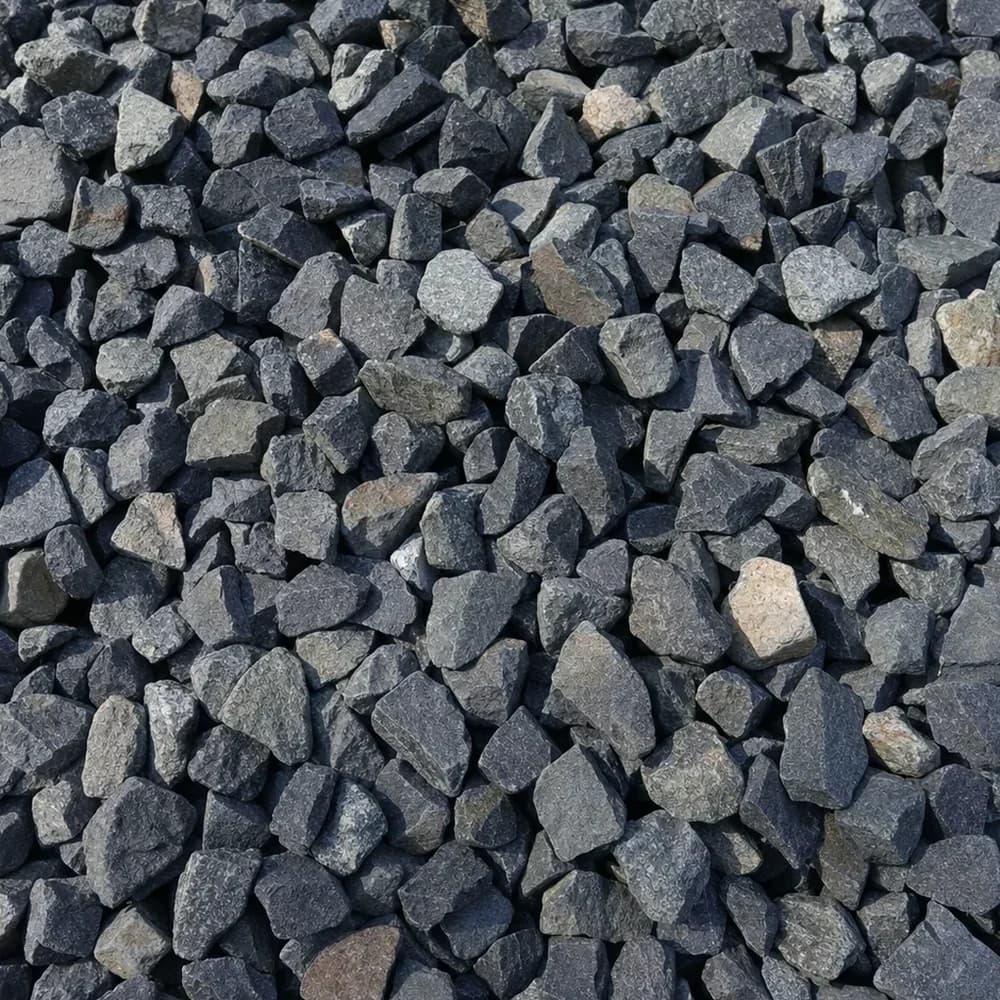
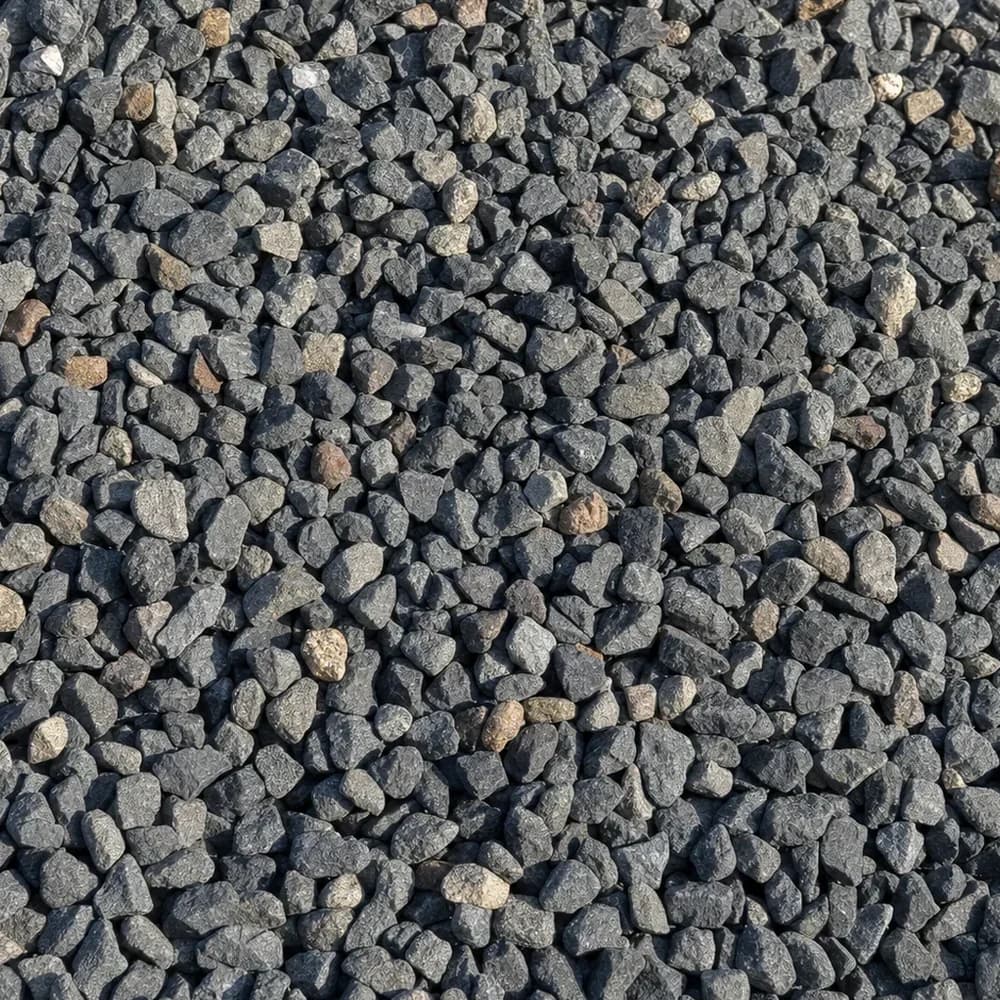
Because angular crushed gravel interlocks under pressure, it works well where vehicles travel. Rounded materials such as pea gravel and river rock shift under weight, so use them for beds and walking paths. A long-lasting driveway uses a compacting layer of crusher run or road base under a draining surface of driveway gravel or #57. If you need help comparing products or identifying existing material, send a photo through the contact form.
How gravel is measured and sold
One pile has three common measurements. Cubic yards measure volume, while a ton measures 2,000 lb and equals about 0.71 yards of gravel. Truck capacity depends on the truck: 8 to 10 yards for a single-axle dump truck and 12 to 16 yards (17 to 22 tons) for a tandem. Put quotes into tons before comparing prices, then compare the delivered price. Hauling can account for half the aggregate cost; free delivery on every Oregon Rock Supply order means the listed per-ton price is the amount for your driveway.
How to measure unusual driveways
Curved drives and turnarounds need a different approach. Measure a curved lane along its centerline, then use the average width. For a rounded turnaround, use the widest span as its diameter. On slopes, make the base course deeper at the downhill side, where both water and gravel move. For an irregular layout, divide the space into rectangles and total them in multiple-areas mode.
Planning a proper delivery
- Before delivery, select a firm drop location with no low wires or septic field crossings.
- Place the load near the project area. Moving a yard of gravel takes 9 to 14 wheelbarrow trips, and 10 extra feet makes a difference across 6 yards.
- If material is being tipped on pavement you want to protect, put down a tarp. It can reduce cleanup from an afternoon to ten minutes.
- Install and compact the base course before spreading the surface layer. A rented plate compactor works well, though truck tires can work in a pinch.
Gravel answers by the numbers
What does 1 ton of gravel cover?
How can I calculate the gravel I need?
How much gravel covers a 10x10 area?
How many gravel yards make up a ton?
What is the size of a gravel truckload?
What is the cost of a yard of gravel?
Is extra material needed for compaction?
Can gravel be installed over grass?
More calculators
This tonnage includes free delivery.
Driveway gravel, #57 and crusher run are sold by the ton and delivered throughout Oregon.