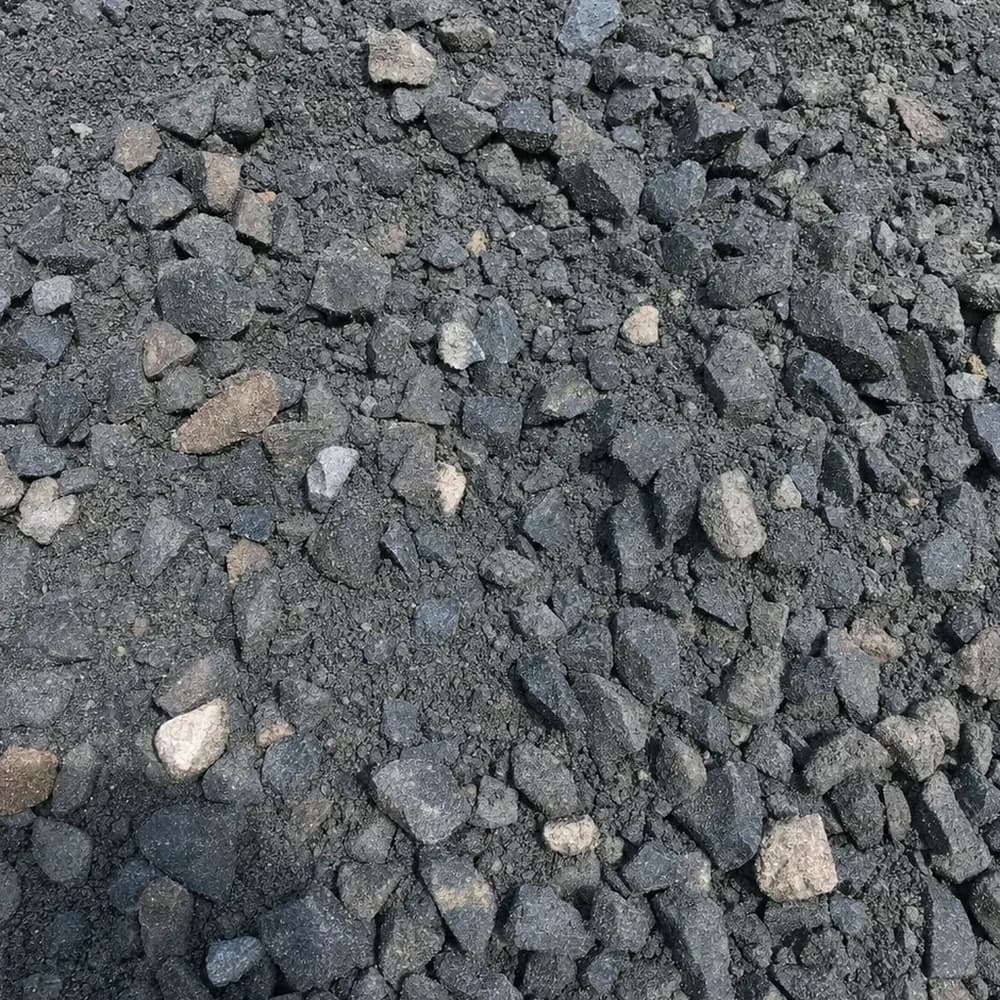
Crusher run calculator for Oregon
Plan the base by its finished compacted depth, not by an estimate of loose material.
Enter your project dimensions
Loose crusher run tightens by 10-15% once compacted. If you buy only for the measured depth, the finished base can end up half an inch short. This calculator therefore begins with a +10% allowance selected. It may be listed under names such as Quarry Run, pit run, bar run in Oregon, or 2 inch minus on some tickets. Each name describes crushed stone containing fines, at about 3,000 lb per cubic yard, which compacts into a tire-resistant surface.
Order for finished depth
- In feet, find the footprint by multiplying lane length and width, or entering the pad dimensions.
- Choose the needed finished compacted depth: 4 inches for paths and pavers, 4-6 for driveways, and 6-8 beneath trucks.
- Divide cubic feet by 27 for yards, then multiply by 1.5 for tons. Leave the +10% selected. Specifications refer to the depth after rolling.
Tons of coverage
| Compacted depth | 1 cubic yard covers | 1 ton covers |
|---|---|---|
| 2 inches | 162 sq ft | ≈ 108 sq ft |
| 4 inches | 81 sq ft | ≈ 54 sq ft |
| 6 inches | 54 sq ft | ≈ 36 sq ft |
| 8 inches | 41 sq ft | ≈ 27 sq ft |
Suitable uses and limits
- For driveways, place a 4-6 inch compacted foundation, followed by 2-3 inches of #57 or driveway gravel as the finished driving layer.
- For an economical rural lane, crusher run can serve as the driving surface by forming a compacted crust. It will be dusty in summer and typically needs reshaping every 2-4 years.
- For pavers and slabs, install a 4 inch base in compacted 2-inch layers. The Paver Base Calculator covers the complete paver build-up.
- After removing surface soil, use 4 inches beneath shed and hot-tub pads, or 6 where the soil is soft.
- Do not use it in a French drain. Its fines help it bind but also retain water; clean #57 or drain rock is intended for drainage.
Example: a 20 x 10 parking pad
Begin with the math: 200 x 0.333 = 67 cubic feet = 2.5 cubic yards, or 3.7 tons. For a 4-inch compacted layer, include the allowance and order 4 tons. Put down one half and compact it, then repeat with the remaining material. Building with two 2-inch courses lasts years longer than placing a single 4-inch layer. Renting a plate compactor for the afternoon is less costly than fixing the first pothole. By the second delivery, ruts often show where compaction was missed.
Delivery guidance
- Have the base material and surface stone brought together in one delivery so the work can continue on schedule; delivery is free either way.
- Unload at the distant end of the run, then work the stone back toward the pile. On large pads, spreading downhill rather than uphill saves a full day.
- Before compacting, mist each lift. Damp crusher run tightens more visibly than dry material.
- Hold back a wheelbarrow-load for future patches. This material is also used for pothole repairs.
How pricing works
Crusher run is crusher output rather than washed, sorted stone, so it can be a lower-cost base material. On a 4-ton order, the +10% allowance can prevent the need for a separate half-ton delivery. Review Crusher Run pricing by the ton, compare Road Base, and arrange both driveway layers in one free delivery.
Crusher run, Quarry Run, pit run, bar run: common questions
How much crusher run is required for a driveway?
What does a yard of crusher run weigh?
How do crusher run and gravel differ?
Are crush and run and crusher run identical?
Can crusher run serve as a finished surface?
How much will crusher run compress?
More calculators
Base tonnage is ready.
Crusher run by the ton, with free delivery.