Road base calculator for Oregon
Calculate lane and pad quantities after compaction, since a few inches can mean ten tons on an order.
Enter your project dimensions
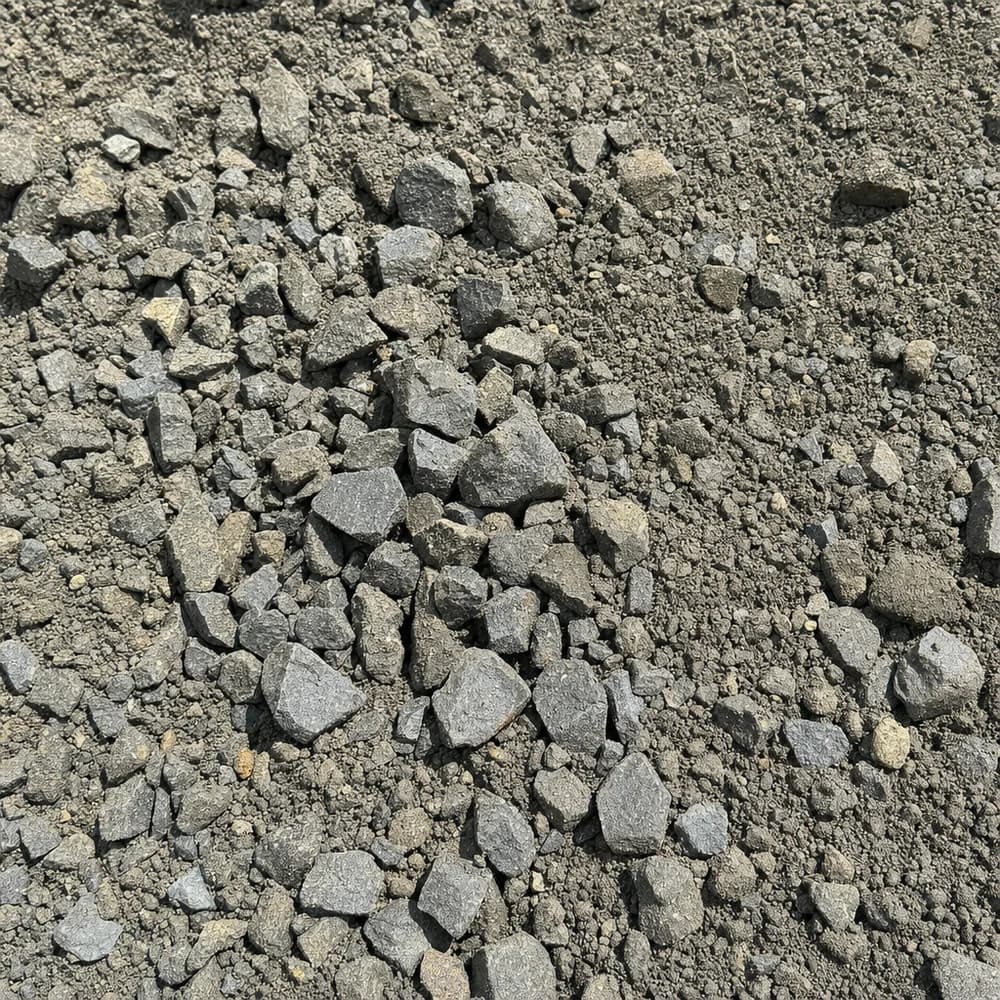
At 6 inches compacted, a 100-foot lane that is 10 feet wide takes about 31 tons of road base. Long lanes can add up quickly, often reaching 30 tons, which makes free delivery especially relevant when hauling can approach the cost of the stone. Road base combines graded crushed stone and fines, weighing about 3,000 lb per cubic yard, and compacts into a firm layer for driveways, roads, and equipment yards. Where specifications permit it, recycled crushed concrete base uses the same calculation.
Lane calculations
- For a lane, take its centerline measurement and multiply by its average width. For pads, multiply the length and width.
- Choose 4 inches compacted for light residential use, 6 for delivery trucks and everyday traffic, or 8-12 beneath equipment or across soft subgrade.
- For yards, use cubic feet / 27; x 1.5 gives tons, then leave +10% for compaction.
Quick figure: one ton ≈ 36 sq ft at 6" compacted
Lane tonnage and coverage
| Compacted depth | 1 ton covers | Tons per 100 ft of 10-ft lane |
|---|---|---|
| 4 inches | ≈ 54 sq ft | 20.4 |
| 6 inches | ≈ 36 sq ft | 30.6 |
| 8 inches | ≈ 27 sq ft | 40.7 |
| 12 inches | ≈ 18 sq ft | 61.1 |
Build a lane for another Oregon winter
- Remove organic material before laying base. Topsoil beneath stone will pump mud upward regardless of how deep the base is placed.
- Put woven geotextile over soft or wet ground before placing stone. This is especially useful in Willamette Valley winter clay.
- Place and roll lifts no deeper than 4 inches before adding the next layer.
- Give the finished surface a 2-3% slope from its middle toward each side, directing rain off the base.
- For a clean driving surface with less dust, finish with #57 or driveway gravel.
- Hand-spreading 20-plus tons can take a week. Use a tractor with a box blade or a skid steer to spread it in an afternoon, and include the equipment cost.
Example: a 100-foot farm lane
For one hundred by ten feet at 6 inches, the calculation is 1,000 x 0.5 = 500 cubic feet = 18.5 cubic yards: about 28 tons, or 30-31 including the allowance. That amount comes in two tandem loads. Arrange two drop points along the route rather than leaving a single pile at the gate. On farm and vineyard roads, separate piles reduce how far the material must be moved uphill or downhill.
Equipment, container, and RV pads
Pad quantities use the same calculation as lanes, but choose depth for axle load rather than the calendar. At 6 inches compacted, a 12 x 40 RV pad requires about 12 tons. An 8 inches-deep 20 x 40 equipment yard takes 27. Shipping containers put their load onto four corners, so use a full 8 inches plus fabric for container pads, even on decent ground, to keep those corners from marking the pad by spring.
Road base from crushed concrete
Virgin road base and recycled concrete base perform similarly for compaction and load support, while recycled material can cost less. Review county specifications first, since virgin aggregate is required in some cases. Recycled base works well for private pads and lanes. Use the same figures for either material: 1.5 tons per yard, along with the same lifts and crown.
Road base sold by ton or lane
How can I determine the road base I need?
What area will 1 ton of road base cover?
What does 1 yd of road base weigh?
How deep should road base be for a driveway?
Road base compared with crusher run
Is fabric needed beneath road base?
More calculators
Thirty tons with zero delivery fees.
Road base sold per ton with free hauling for lane-sized orders, where transportation can account for much of the cost.