Pea gravel calculator for Oregon
Plan patios, fire pits, paths, and play areas in tons of 3/8 inch rounded stone.
Enter your project dimensions
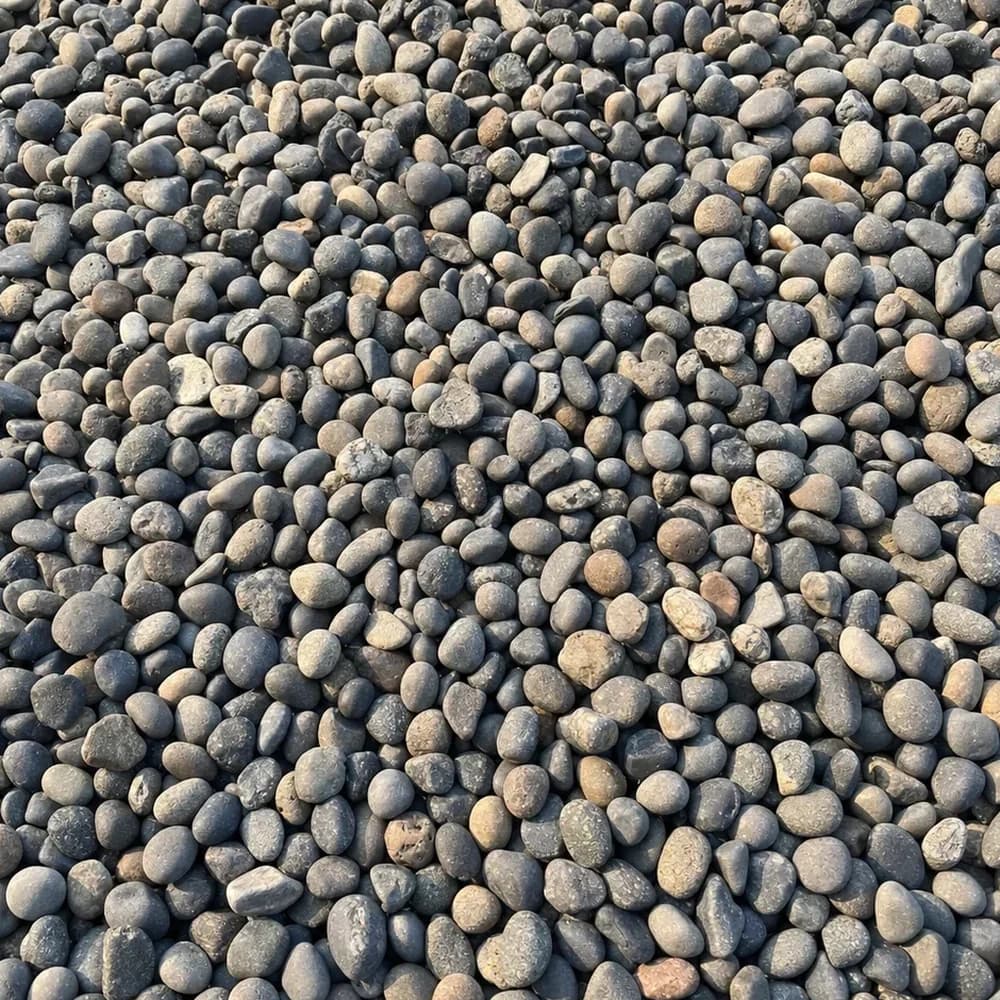
Pea gravel consists of rounded 3/8 inch stone, roughly pea-sized. Though it feels soft underfoot, it weighs 2,800 lb per cubic yard, or 1.4 tons, the same as crushed gravel. Installation depth makes the difference. With less than 2 inches, the ground can show through. More than 3 inches leaves feet sinking into a dry-beach feel. Use this calculator to convert your measurements into tons, including play-area depths outside the 2 to 3 inch range.
Turn measurements into tons
- Find length and width for a rectangular space. For a circular fire-pit surround, measure the diameter.
- Use 2-3 inches where people walk. Maintain 9-12 inches in playground fall zones.
- Divide cubic feet by 27 for cubic yards, then multiply yards by 1.4 for tons.
Material coverage
| Depth | 1 cubic yard covers | 1 ton covers |
|---|---|---|
| 2 inches | 162 sq ft | ≈ 116 sq ft |
| 3 inches | 108 sq ft | ≈ 77 sq ft |
| 4 inches | 81 sq ft | ≈ 58 sq ft |
| 12 inches, play area | 27 sq ft | ≈ 19 sq ft |
| Project | Typical size | Depth | Volume | Weight |
|---|---|---|---|---|
| Patio / seating area | 12 x 12 ft | 3" | 1.3 yd³ | 1.9 tons |
| Garden walkway | 25 x 3 ft | 2.5" | 0.6 yd³ | 0.8 tons |
| Fire-pit surround | 12 ft round | 3" | 1 yd³ | 1.5 tons |
| Playground fall zone | 20 x 20 ft | 12" | 14.8 yd³ | 20.7 tons |
| Dog run | 15 x 8 ft | 3" | 1.1 yd³ | 1.6 tons |
A border keeps gravel contained
Because the stones are round, pea gravel can shift out of place. Contain it with a border. Set steel, aluminum, timber, or paver edging an inch above the finished surface to hold the stone in. Flush edging can allow stone to escape within a season. Once a grade exceeds about 5%, rain and foot traffic can move gravel downhill despite edging. Use a honeycomb stabilizing grid below the gravel on slopes, or choose angular crushed stone that locks together.
Comparing pea gravel, crushed gravel and river rock
Pea gravel feels comfortable under bare feet and shifts easily. Crushed gravel for paths stays put better and works on slopes, though its edges are sharper. River rock is larger and decorative, making it better suited to planting beds than walking areas. Cost generally rises in that same sequence. A property may use all three: crushed gravel on a sloping path, pea gravel at a fire pit, and river rock beside the foundation. Use the calculators here to compare tonnage for one footprint in about a minute.
Notes for common projects
- Patios: Put down 2 inches of compacted screenings to support chair legs. Cover it with 2 to 3 inches of pea gravel.
- Play areas: Keep 9 to 12 inches of material at the fall-zone depth, and review your equipment manual. At 12 inches, a ton covers about 19 square feet. Use the calculator instead of estimating by eye.
- Fire pits: Use 3 inches. This non-flammable stone lets rain drain from the seating area overnight.
- Dog runs: Spread 2 to 3 inches. Rounded stone is easier on paws and rinses clean.
- Walkways: Level the surface with a rake twice a year. Keep a bucket or two back to refresh the traffic line every couple of seasons.
Example: a 12-foot fire-pit circle
For a 12-foot diameter circle, the area is 113 square feet. At 3 inches: 113 x 0.25 = 28 cubic feet = 1.05 cubic yards, a little below 1.5 tons. Order 1.5, then save the small surplus for the high-traffic edge next spring.
Pea gravel quantities and weight
How much pea gravel is needed?
What area will a ton of pea gravel cover?
What is the weight of a yard of pea gravel?
What does pea gravel cost?
What is pea gravel made of?
What depth works for a pea gravel patio?
How deep should pea gravel go beneath a swing set?
For a walkway, pea gravel or crushed gravel?
More calculators
Most patios use less than two tons.
3/8 inch natural pea gravel, sold by the ton with free delivery.